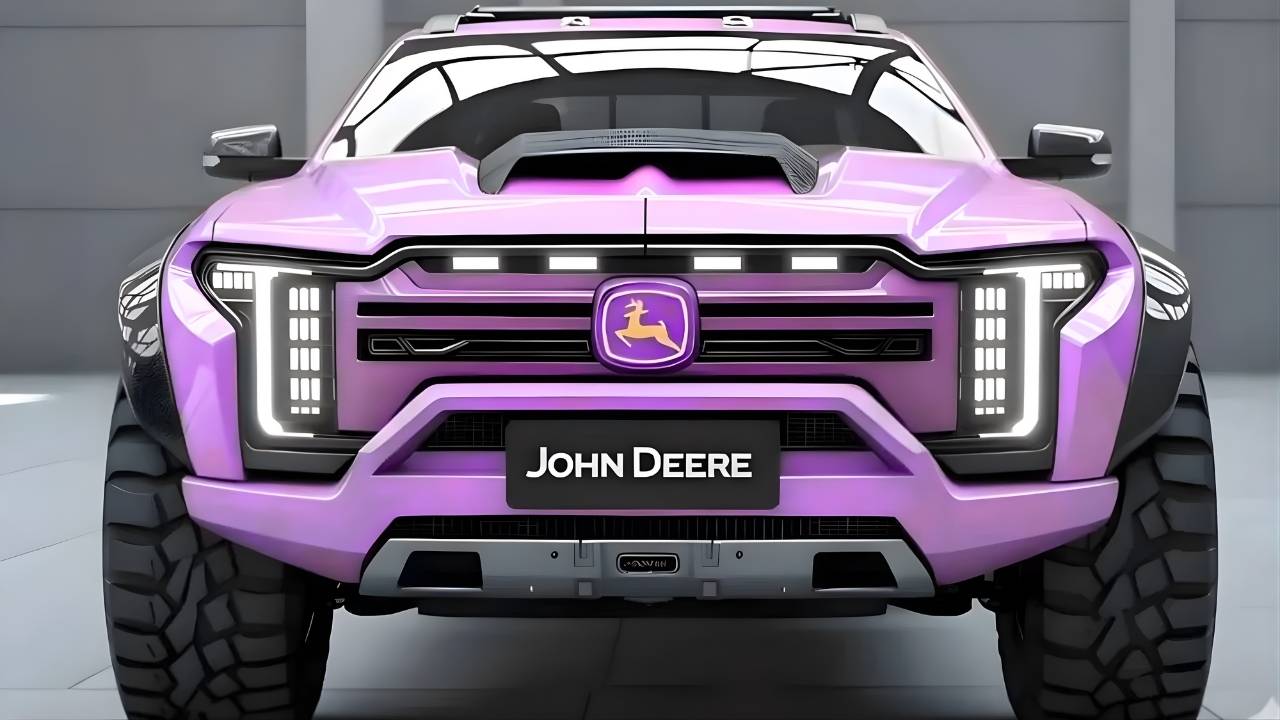
For decades, John Deere Pickup Truck has been a name synonymous with rugged reliability, agricultural innovation, and machines built to work long after others quit. In 2026, the iconic green-and-yellow brand is taking a bold step beyond tractors and combines with the reveal of the John Deere Pickup Truck. Designed from the ground up for farmers, ranchers, contractors, and rural professionals, this truck isn’t about flashy street appeal. It’s about torque, toughness, and tools-first thinking, wrapped in a pickup that feels unmistakably John Deere.
A Bold Entry into the Pickup Market
The John Deere Pickup Truck 2026 arrives at a time when the pickup segment is more crowded than ever. Established players dominate highways and job sites, but Deere’s approach is different. Instead of chasing luxury trends or lifestyle branding, the company focused on real-world agricultural needs. This truck is meant to live on dirt roads, muddy fields, gravel paths, and work sites where reliability matters more than chrome.
John Deere’s engineering team reportedly collaborated closely with farmers and fleet operators during development. The result is a pickup that prioritizes durability, ease of maintenance, and adaptability to farm equipment, rather than comfort features that add cost without improving productivity.
Heavy-Duty Power Built for Real Work
At the heart of the 2026 John Deere Pickup is its heavy-duty powertrain lineup. The base configuration features a turbocharged diesel V8 designed for sustained low-end torque, ideal for towing trailers loaded with livestock, hay, or heavy machinery. Early specifications suggest towing capacity competitive with top-tier heavy-duty pickups, with emphasis on consistent performance rather than peak horsepower bragging rights.
A hybrid-assisted diesel option is also expected, aimed at improving fuel efficiency during long days in the field or extended highway hauls between properties. This system doesn’t sacrifice power; instead, it delivers smoother torque delivery and reduced fuel consumption under load.

For buyers in colder climates or remote areas, the engine bay is designed with accessibility in mind. Filters, belts, and service points are positioned for quick inspection and repair, even with gloves on. That small detail says a lot about who this truck is really for.
Farm-Ready Design Inside and Out
Visually, the John Deere Pickup Truck stays true to the brand’s heritage. The exterior design is boxy, purposeful, and confident, with clean lines and minimal ornamentation. The grille proudly carries the John Deere emblem, flanked by rectangular LED headlights designed for maximum visibility during early morning or late-night work.
The bed is where the truck truly stands apart. Reinforced steel construction, integrated tie-down rails, and optional factory-installed tool mounts make it more of a mobile workstation than a simple cargo area. Buyers can choose bed configurations that include lockable toolboxes, hydraulic-assisted tailgates, and even PTO-compatible auxiliary power outlets for running equipment directly from the truck.
Inside the cabin, the focus remains practical. Seats are durable, stain-resistant, and easy to clean. The flooring is rubberized rather than carpeted, acknowledging the reality of mud, dust, and spilled feed. Controls are large, clearly labeled, and designed to be used with work gloves.
Technology That Supports, Not Distracts
While John Deere avoided unnecessary luxury, the 2026 pickup is far from outdated. The infotainment system is simple but robust, featuring a touchscreen optimized for visibility in direct sunlight. It supports basic navigation, Bluetooth connectivity, and integration with John Deere’s farm management software.

This integration allows operators to sync field data, equipment diagnostics, and maintenance schedules directly from the truck. For large operations, fleet tracking and performance monitoring can be managed from a central system, helping reduce downtime and improve efficiency.
Advanced driver-assistance features are included, but they’re tuned for rural environments. Trailer sway control, hill descent assist, and adaptive towing guidance are standard. Instead of city-focused systems like automated parking, the emphasis is on stability, control, and safety under heavy loads.
Built to Last, Not Just to Impress
One of the most appealing aspects of the John Deere Pickup Truck 2026 is its long-term durability philosophy. The frame uses high-strength steel designed to handle years of torsional stress from uneven terrain. Suspension components are overbuilt compared to typical consumer pickups, favoring longevity over ride softness.
John Deere is also expected to offer an extended service and parts availability program, ensuring that replacement components remain accessible for decades. This aligns perfectly with the brand’s reputation in the agricultural world, where machines are often passed down through generations. The truck’s electronics are deliberately simplified to reduce failure points, a decision that may surprise tech-heavy competitors but will be welcomed by operators who value uptime above all else.
Who This Truck Is Really For
The 2026 John Deere Pickup Truck isn’t trying to win over suburban commuters or luxury truck enthusiasts. Its target audience is clear: farmers, ranchers, construction crews, forestry workers, and anyone who treats a pickup as an essential tool rather than a lifestyle accessory. For these buyers, the value lies not in premium leather or oversized touchscreens, but in a truck that starts every morning, hauls what it promises, and shrugs off abuse without complaint.

Final Thoughts
The John Deere Pickup Truck 2026 represents a refreshing shift in the pickup world. By focusing on farm-ready performance, heavy-duty power, and long-term durability, John Deere has created a vehicle that feels authentic to its roots. It may not appeal to everyone, but for those who live and work where reliability is non-negotiable, this truck could quickly become a new standard. If John Deere delivers on its promises, the fields, farms, and work sites of America may soon be seeing a lot more green rolling down the road.
